
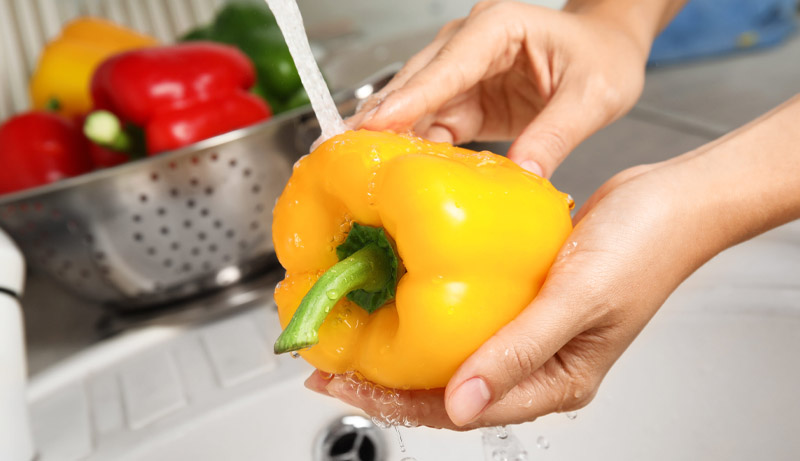
September is a great time to enjoy fresh produce, whether you are bringing home apples from a local orchard, picking up seasonal vegetables at a farm market or enjoying the last tomatoes from your backyard garden. Before taking that first bite, however, a few simple steps can help make sure fresh fruits and vegetables are handled safely.
According to Kelly D’Agostino, MS, RDN, a registered dietitian at Shore Medical Center, proper produce safety begins before you even touch the food. She recommends washing your hands with soap and warm water for 20 to 30 seconds before handling, washing or cutting fresh produce.
Once your hands are clean, washing the produce itself does not need to be complicated. D’Agostino says rinsing fruits and vegetables under cold running water is generally all that is needed. There is no need to use bleach, vinegar or commercial fruit and vegetable washes, which are not recommended by the U.S. Food and Drug Administration for washing produce. Some cleaning products can also leave unwanted residue behind, making a thorough rinse with water the simpler choice.
While most people probably remember to wash an apple before taking a bite, it can be easy to overlook produce with a thick rind or peel that will not be eaten. Watermelon and cantaloupe are good examples, and D’Agostino says they should still be washed before cutting.
The reason has less to do with what is inside the fruit and more to do with the knife used to cut it. When a knife passes through an unwashed rind and continues into the fruit, anything on the outside can be carried onto the portion you are about to eat. The same principle applies when peeling foods such as cucumbers because the peeler or knife repeatedly comes into contact with both the outside and inside of the food.
Berries require a little extra attention because moisture can encourage mold growth. D’Agostino recommends removing berries from their original container, rinsing them in a clean colander and allowing them to dry thoroughly before placing them in a clean container in the refrigerator. Produce should also be inspected for damaged areas. A bruised spot on a tomato, for example, can be cut away, while a grape that is breaking down or has a damaged area can simply be discarded.
Proper storage becomes especially important once produce has been cut. Although a bowl of watermelon or cantaloupe may seem harmless sitting on the kitchen counter, D’Agostino recommends refrigerating cut produce within two hours. Fruits and vegetables have a high water content, which creates an environment where bacteria can grow when food remains at room temperature for too long.
The refrigerator does not make food last indefinitely, either. For cooked vegetables and other prepared produce, D’Agostino recommends following a general three to four day limit rather than stretching leftovers into a fifth or sixth day.
As families enjoy everything the fall harvest has to offer, produce safety does not have to involve special products or complicated routines. Clean hands, cold running water, careful cutting and proper refrigeration can go a long way toward helping everyone enjoy fresh fruits and vegetables safely.