
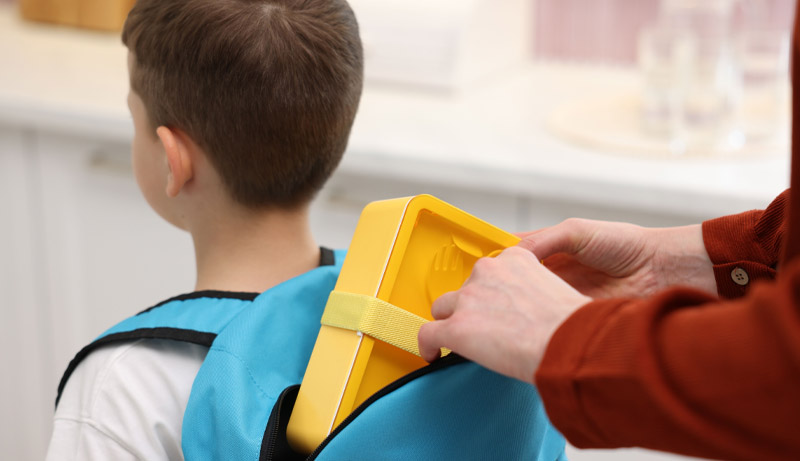
With the start of a new school year comes the return of the morning routine, including the daily task of packing a lunch that parents hope is nutritious and children will actually eat. While choosing healthy foods is important, Kelly D’Agostino, MS, RDN, a registered dietitian at Shore Medical Center, says parents can also think about how children choose their food, how it is presented and when they will eat it during the school day.
One way to make healthy lunches more successful is to involve children in the process before it is time to pack their lunch. D’Agostino recommends giving children an opportunity to make some of their own food choices, while parents establish the healthy options from which they can choose. A trip to the grocery store, for example, can include asking a child to select the fruit or vegetable they would like for the week. Rather than asking whether they want a fruit at all, parents can ask whether they would prefer apples, grapes or bananas. Even younger children can participate by pointing to a fruit or vegetable they would like to try.
That involvement can make children more interested in what eventually appears in their lunchbox, while also helping them become comfortable with choosing and preparing food. As children get older, those early experiences can make it easier for them to take more responsibility for packing their own lunches and making healthy choices independently.
Parents can also reconsider how fruits and vegetables are presented. When carrots or another vegetable are packed separately from the rest of the meal, they can easily become the item a child saves for last and ultimately brings home. D’Agostino suggests making fruits and vegetables feel more like part of the meal by combining them with foods that have complementary flavors and textures. Apple slices and celery sticks, for example, provide a similar crunch and can be paired with peanut or almond butter for dipping. Carrots can be combined with raisins or dried cranberries, while sliced banana can be added to a peanut or almond butter sandwich in place of jelly.
Just as important as what goes into the lunchbox is knowing when your child will open it. School lunch periods can vary considerably, with some students eating as early as 10:30 a.m. and others waiting until 1 p.m. D’Agostino says parents should take that schedule into consideration when planning both lunch and snacks because children need enough fuel to carry them through the entire school day.
For a child who eats lunch early, including protein in the meal can help provide staying power, while fruit or a whole grain granola bar later in the day can provide energy. A child with a later lunch may benefit from a protein containing snack earlier in the day, such as a cheese stick or protein bar, if the school allows snacks. As D’Agostino explains, protein helps children feel full, while carbohydrates provide energy.
Healthy school lunches do not have to require extensive meal preparation or complicated recipes. By giving children a role in choosing healthy foods, finding appealing ways to incorporate fruits and vegetables and considering when they eat during the school day, parents can create a lunch routine that is manageable at home and more likely to keep children fueled throughout their day.