
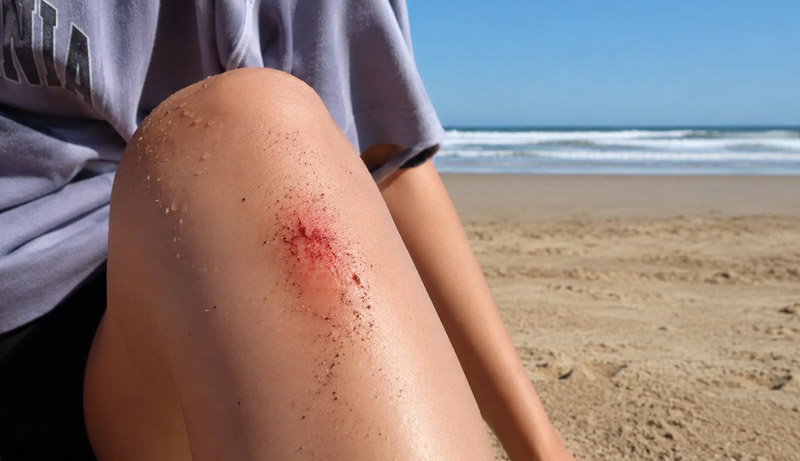
Most cuts and scrapes are little more than an annoyance. You rinse them off, apply a bandage, and move on. But when that same cut happens in natural water, mud or dirt, the risk changes, sometimes dramatically. Both fresh and salt water harbor bacteria that aren't found on dry land, and while many water-related wounds stay minor, some can develop into serious infections far faster than people expect.
With summer officially in full swing, you and your family may be spending more time outdoors and in natural water, where shells, rocks, barnacles, fish hooks, rough terrain, and muddy conditions can easily break the skin. Mud runs and obstacle races add another layer of risk, as participants frequently crawl through warm, standing water with exposed scrapes and abrasions. Warm summer temperatures can create ideal conditions for some bacteria to thrive, making it even more important to properly clean and monitor wounds sustained during outdoor activities.
According to Dr. William Schumacher, an Emergency Department physician at Shore Medical Center, wounds exposed to fresh or salt water deserve special attention. "All wounds should be cleaned with soap and water and covered with a clean, dry dressing," he said. "Special attention should be paid to dirty wounds, including those sustained in fresh water, salt water, mud, or soil, as they may carry an increased risk of infection. It’s also important to make sure your tetanus vaccination is up to date."
Understanding the risks and knowing when a wound may need medical attention can help prevent a minor injury from becoming a more serious problem.
What May Be Lurking in the Water?
One of the most serious threats is Vibrio vulnificus, found in warm saltwater and coastal environments, including waters along the Jersey shore. A Vibrio infection can progress to a life-threatening emergency within 24 to 48 hours.
"What looks like a mild wound infection in the morning can become a limb-threatening emergency by evening," said Dr. Schumacher.
Freshwater carries its own concerns. Lakes and muddy water can harbor Aeromonas hydrophila, which causes painful skin and soft tissue infections. Water contaminated with animal waste can contain leptospira, bacteria that may initially cause flu-like symptoms but can eventually lead to kidney or liver failure. Pseudomonas aeruginosa, which is resistant to many common antibiotics, thrives in a wide range of water environments. MRSA has also been found in ocean water and wet sand. And wherever there's mud or soil, Clostridium bacteria pose a risk for tetanus and deeper soft-tissue infections.
The Wound Doesn't Have to Be Bad
A small scrape, blister, or puncture wound can be the only entry point bacteria need. Symptoms may not appear for several days, making it easy to forget about the swim, fishing trip, afternoon wading through a creek, or muddy obstacle course that may have exposed the wound.
"You may not even connect your symptoms to what happened a few days ago," said Dr. Schumacher. "That's why it's so important to monitor any skin break that's been exposed to natural water, even if it seemed minor at the time."
Signs of infection include redness spreading beyond the wound's edges, increasing swelling or warmth, drainage, worsening pain, blisters, and fever or chills. People with diabetes, liver disease, weakened immune systems, or other chronic illnesses face significantly greater risk and should treat any water-related wound as urgent from the start.
What to Do Right Away
If you've suffered a cut or scrape while outside or in natural water, take these steps right away:
- Rinse thoroughly. Use clean, fresh water for several minutes—the single most important step.
- Wash gently with soap. Clean the surrounding skin and remove visible debris without scrubbing directly into the wound.
- Apply antibiotic ointment. Products such as Neosporin or Bacitracin may help keep minor wounds moist and protected.
- Cover and monitor. Change the bandage daily and watch closely for signs of infection over the next 72 hours.
It's also important to make sure your tetanus vaccination is up to date. If you're unsure when you last received a tetanus booster, ask your healthcare provider. If it’s not current, ask about getting one – it can still be beneficial after exposure.
For deep cuts, persistent bleeding, or any signs of infection, seek care the same day. For spreading redness, fever, or rapidly worsening symptoms, go directly to the emergency department.
Enjoy the water this summer, but don't ignore the cuts and scrapes that happen in natural environments. Taking a few minutes to properly clean and monitor a wound can help prevent a minor injury from becoming a serious infection.
If you need care, Shore is here for you. Visit Shore Urgent Care at 2605 Shore Road, Northfield, NJ, open Monday through Friday from 9 a.m. to 8 p.m. and Saturday and Sunday from 9 a.m. to 5 p.m. If it's after hours or you believe the infection may be serious, visit Shore Medical Center's Emergency Department, including its separate, child-friendly Pediatric ER, at 100 Medical Center Way, Somers Point, NJ, open 24 hours a day, 365 days a year.